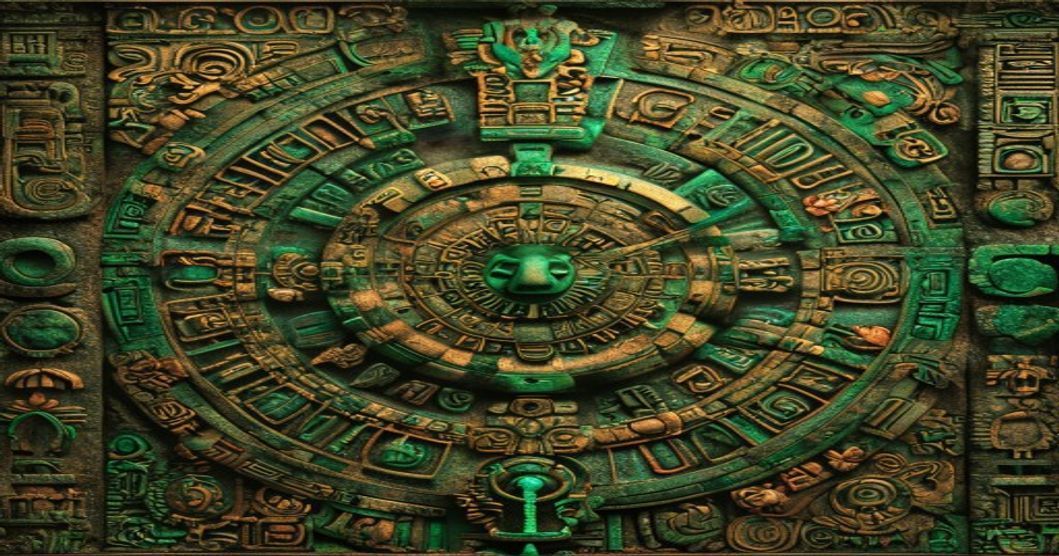
Enigmatic Day-Signs of the Maya:
A Comprehensive Guide to Nahual and Nawal Archetypes
By Librarian Joséf Sánchez Coach | Visit josef.sesy.ai
I. Cosmological Context and Temporal Science
The Maya civilization is globally renowned for its deeply sophisticated understanding of the cosmos, advanced mathematics, and highly complex calendrical systems. Among the most intriguing and profound aspects of Mesoamerican knowledge is the day-sign system, which forms the qualitative spiritual backbone of indigenous timekeeping. In this academic article, preserved in our digital open library, we delve deeply into the mysteries of the day-signs, focusing on the Nahual and Nawal archetypes—two of the most enigmatic, culturally significant, and often misunderstood concepts in Mesoamerican cosmology.
Understanding the day-signs requires a clear grasp of their broader cosmological context. The ancient Maya conceived the universe as a living web governed by interlocking cycles, most notably the 260-day sacred Tzolk’in calendar and the 365-day solar Haab’ calendar. The day-signs played a crucial role in this matrix, providing a mathematically precise means of tracking time, predicting astronomical events, understanding human psychology, and guiding community rituals across generations of cultura maya.
II. Mathematical Foundations: Clarifying 20 Signs and 13 Tones
To maintain exact epigraphic accuracy within the mayan library, we must clarify a fundamental mathematical distinction. While popular introductory summaries occasionally refer to “13 signs,” authentic Mesoamerican epigraphy establishes that the Tzolk’in matrix is structured through the continuous gear-like rotation of 20 distinct named day-signs (archetypal nahuales mayas) and 13 galactic numbers (tones).
The 13 galactic numbers supply the wave of energetic intensity (from inception at Tone 1 to spiritual maturation at Tone 13), while the 20 day-signs supply the qualitative archetype (such as Imix, Ik’, Chuwen, or Ajaw). Multiplying these two independent wheels ($13 \times 20$) generates the 260 unique daily coordinates of the sacred year. This dual system bridges the natural world (represented by animal and elemental totems) with the human condition (represented by psychological traits and spiritual destiny).
III. Epigraphic Master Catalog: The 20 Authentic Sacred Day-Signs
The terms Nahual (derived from the Nahuatl nahualli, meaning protective spirit transformational energy) and Nawal (the K’iche’ Maya spelling for the sacred birth energy) reflect complementary dimensions of the same ancestral science. The Nahual aspect connects humanity to animal totems and terrestrial forces, while the Nawal aspect reflects individual spiritual character and moral destiny.
Below is the complete, authentic epigraphic catalog of all 20 sacred day-signs cycling through the calendario maya, complete with their Yucatec and K’iche’ naming conventions, elemental totems, and cosmological meanings.
| Day-Sign (Yucatec / K’iche’) | Natural Totem & Element | Cosmological Energy & Spiritual Meaning |
|---|---|---|
| 1. Imix / Imox | Crocodile / Primordial Water | Primordial ocean, maternal nurture, deep fertility, abundance, and absolute creative inception. |
| 2. Ik’ / Iq’ | Wind / Divine Air | Divine breath of life, spirit, dynamic communication, intellect, and atmospheric vitality. |
| 3. Ak’b’al / Aq’ab’al | Night / Cave / Hearth | Sanctuary of darkness, structural stability, domestic hearth, grounding, and hidden potential. |
| 4. K’an / K’at | Lizard / Maize Seed | Vital spark of life, agricultural abundance, resource gathering, adaptation, and physical growth. |
| 5. Chikchan / Kan | Celestial Serpent / Fire | Serpentine life force, raw physical energy, passion, success, achievement, and rapid transformation. |
| 6. Kimi / Kame | Owl / Death Transformer | Necessary transition, letting go of old patterns, ancestral wisdom, renewal, and spiritual rebirth. |
| 7. Manik’ / Kej | Deer / Healing Hand | Grasping hand of healing, physical vitality, wilderness protection, warmth, and creative solar energy. |
| 8. Lamat / Q’anil | Rabbit / Venus Star | Cosmic multiplication, art, aesthetic beauty, adaptation, resilience, and seed germination. |
| 9. Muluk / Toj | Water Jade / Offering Fire | Ceremonial fire and water, repayment of karmic debts, gratitude, emotional fluidity, and rebirth. |
| 10. Ok / Tz’i’ | Dog / Underworld Guide | Loyal companion, fiery passion, spiritual justice, unconditional love, and underworld guidance. |
| 11. Chuwen / B’atz’ | Monkey / Master Artisan | Master weaver of time, human creativity, intellectual playfulness, agility, intuition, and art. |
| 12. Eb’ / E | Road / Human Destiny | Path of destiny, high perspective, circulatory health, community progress, and spiritual travel. |
| 13. B’en / Aj | Reed / Cornstalk Pillar | Pillar of community, quickness, personal authority, home foundation, and vertical growth. |
| 14. Ix / B’alam | Jaguar / Earth Magic | Nocturnal terrestrial power, stealth, strength, feminine magic, and jungle protection. |
| 15. Men / Tz’ikin | Eagle / Sky Bird | High visionary perspective, prophetic insight, intuition, transformation, and sky connection. |
| 16. Kib’ / Ajmaq | Vulture / Armor Candle | Karmic cleansing, ancestral forgiveness, deep introspection, wisdom, and spiritual armor. |
| 17. Kab’an / No’j | Earthquake / Active Mind | Active intellect, seismic earth movement, water adaptability, synchronicity, and collective thought. |
| 18. Etz’nab’ / Tijax | Flint Blade / Obsidian Mirror | Mirror of truth, thorn of defense, sharp blade cutting through illusion, healing, and clarity. |
| 19. Kawak / Kawoq | Rain Tempest / Midwife | Tempest of renewal, water rebirth, family unity, emotional clearing, and fertility. |
| 20. Ajaw / Junajpu | Sun Lord / Hero Twin | Solar light, energy, spiritual leadership, hero twin mastery, and divine culmination. |
IV. Historical Significance and Classical Elite Application
During the Classic Maya Period (200–900 CE), the Nahual and Nawal day-signs held supreme historical importance among royal dynasties and priestly lineages (Ajq’ijab). Monarchs at Palenque, Tikal, Copán, and Yaxchilán incorporated birth day-signs directly into their formal regal titles. By aligning royal coronations, military campaigns, and temple dedications with specific day-sign transits, rulers demonstrated that their authority was sanctioned by the eternal forces of the cosmos.
This ancient connection between stone architecture and celestial tracking remains vibrantly palpable across Mesoamerica today. Modern travelers riding the tren maya across the Yucatán Peninsula or exploring coastal ruins along the Riviera Maya and Costa Maya are walking through a sacred landscape engineered to capture these transits. Whether staying in an eco-conscious hotel maya near Playa del Carmen or studying codices, engaging with the true maya meaning of the day-signs offers a grounding framework for living in conscious alignment with natural rhythms.
V. Frequently Asked Questions & Your Personal Oracle
As global interest in Mesoamerican cosmology continues to expand, our archival team regularly clarifies key inquiries regarding the day-signs:
- What is the primary significance of the Nahual signs in Maya culture? The Nahual signs represent animal, plant, and elemental archetypes that connect human consciousness directly to the protective forces of the natural world and the cosmos.
- How do the day-signs correlate mathematically with the Tzolk’in calendar? The 20 sacred day-signs combine continuously with the 13 galactic numbers to produce the 260 distinct energetic coordinates that form the complete Tzolk’in round.
- What is the subtle difference between the Nahual and Nawal concepts? While used interchangeably in popular text, Nahual emphasizes the protective, transformational animal or natural totem, whereas Nawal emphasizes the internal spiritual character, moral duty, and birth energy of an individual.
Discover Your Personal Nahual Oracle
Are you ready to calculate the exact ancestral energies imprinted upon you at the moment of your birth?
Get your Free Mexican Nahual Oracle Written by Josef S.
An exclusive, mathematically precise report engineered to decode your unique spiritual destiny.
If you feel a profound calling to physically connect with the ancient lands where these sacred counts were carved into stone, we highly encourage booking your next mindful journey through our trusted luxury partners at Tulum rent and Sesy rent—providing exquisite, spiritually harmonized accommodations along the Mexican Caribbean. Furthermore, elevate your daily rituals by visiting sesy.shop to explore our curated collection of meditation tools, authentic artisan crafts, and deep-dive literature.
References & Further Reading (APA)
- Aveni, A. F. (2001). Skywatchers: A Revised and Updated Version of Skywatchers of Ancient Mexico. University of Texas Press.
- Barrios, C. (2009). The Book of Destiny: Unlocking the Secrets of the Ancient Maya. HarperOne.
- Christenson, A. J. (2007). Popol Vuh: The Sacred Book of the Maya. University of Oklahoma Press. External Link: Wikipedia – Popol Vuh
- Coe, M. D., & Houston, S. (2015). The Maya (9th ed.). Thames & Hudson. External Link: Wikipedia – Maya Civilization
- FAMSI (Foundation for the Advancement of Mesoamerican Studies). (2021). Maya Epigraphy and Day-Sign Systems.
- Freidel, D., Schele, L., & Parker, J. (1993). Maya Cosmos: Three Thousand Years on the Shaman’s Path. William Morrow and Company.
- Instituto Nacional de Antropología e Historia (INAH). (2022). Epigrafía Maya y los Nahuales del Tzolk’in.
- Johnson, K. (2012). Mayan Calendar Astrology: Mapping Your Inner Cosmos. Destiny Books.
- Sánchez, J. (2026). Enigmatic Day-Signs of the Maya: A Guide to Nahual and Nawal. The Mayan Library Repository.
- Smithsonian National Museum of the American Indian (NMAI). Living Maya Time: The Sacred Tzolk’in and Nahual Cycles.
- Tedlock, B. (1992). Time and the Highland Maya (Revised ed.). University of New Mexico Press.