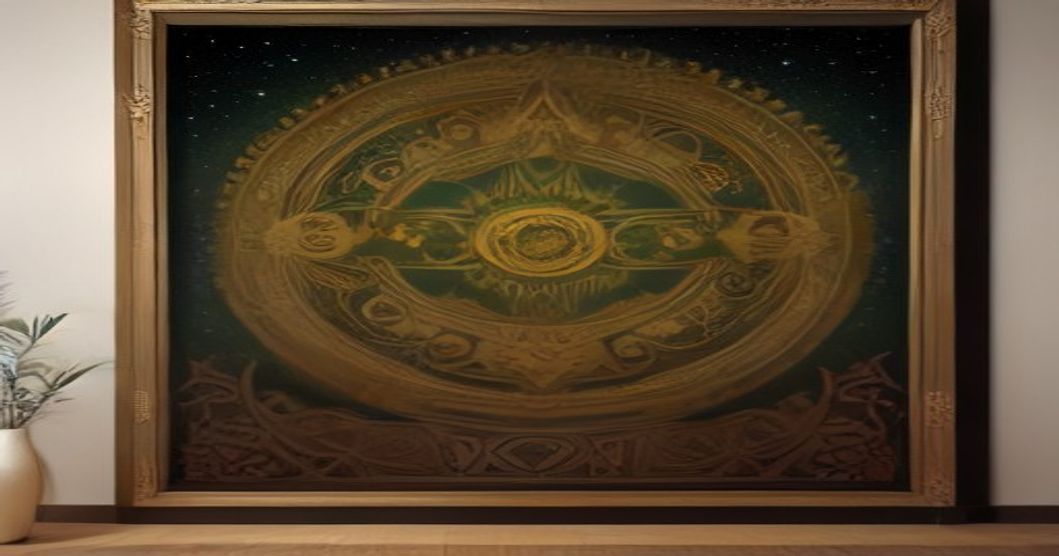
Deciphering the Maya Nawal:
A Multifaceted System of Divination, Cosmology, and Cultural Heritage
By Librarian Joséf Sánchez Coach | Visit josef.sesy.ai
I. Respecting Living Knowledge and Cosmic Weaving
The maya nahual (or Nawal) system stands as an extraordinarily sophisticated, multifaceted framework of divination, astronomy, and deep cultural expression that has captivated epigraphers and spiritual seekers for centuries. At its absolute core, the 260-day sacred mayan calendar weaves together the threads of precise mathematics, celestial tracking, and rich mythology to create a living tapestry of universal symbolism. Through our digital open library, we explore this profound worldview, examining how the nahuales mayas serve as an energetic bridge between humanity, nature, and the divine.
As we explore the profound depth of the Nawal, it is essential to approach this topic with deep respect, humility, and cultural sensitivity. The Maya civilization is not a extinct relic of antiquity, but a vibrant, living, and thriving community of millions who continue to preserve their ancestral traditions across Mesoamerica. Their sacred knowledge and intellectual property must never be reduced to simplistic or exoticized caricatures. In this comprehensive academic article archived at the mayan library, we strive to honor the indigenous Maya elders and daykeepers (Ajq’ijab) by presenting a nuanced, mathematically precise, and historically grounded understanding of their sacred cosmology.
II. Historical Development and Interlocking Timekeeping Systems
While the precise antiquity of the Nawal system stretches into deep prehistory, epigraphic evidence demonstrates that its formalization reached a magnificent peak during the Classic Maya Period (200–900 CE) across the lowlands and highlands. It continued to adapt with incredible resilience through the Postclassic era and survives vibrantly in modern practice. Used primarily for spiritual divination, agricultural forecasting, personal psychological assessment, and statecraft, the Nawal represents the qualitative, energetic backbone of cultura maya.
To properly appreciate this temporal architecture, one must understand how the Nawal interlocks with other Mesoamerican calendar counts. While popular summaries occasionally confuse the terms (such as mislabeling the Tzolk’in as a 365-day solar year), classical epigraphy establishes clear mathematical boundaries:
| Calendar Count | Mathematical Mechanics | Cosmological & Cultural Scope |
|---|---|---|
| The Tzolk’in (Sacred Count) | 260 Days ($20 \text{ Signs} \times 13 \text{ Tones}$) | Tracks the immediate spiritual energies, human gestation, and daily personal birth nahuales. |
| The Haab’ (Solar Year) | 365 Days ($18 \text{ Months} \times 20 \text{ Days} + 5$) | Civil solar year governing physical seasons, rainwater collection, and agricultural cycles. |
| The Long Count | Vigesimal Multiples ($13 \text{ B’ak’tuns}$) | Linear astronomical count measuring vast historical, royal, and cosmic creation epochs. |
III. Day-Sign Archetypes, Colors, and Directions
The 260-day matrix is generated by 20 archetypal day-signs, each carrying distinct elemental properties, cardinal directions, and sacred color associations. In Mesoamerican cosmology, the world is divided into four sacred directions, each governed by specific color frequencies: East (Red – sunrise/creation), North (White – wisdom/ancestors), West (Black/Blue – sunset/transformation), and South (Yellow – maturity/abundance).
From the primordial waters of Imix to the creative weaving of Chuwen, every nahual provides a qualitative blueprint for human character. Below is a curated academic table highlighting key day-signs, restoring their authentic epigraphic translations, directional colors, and zoomorphic totems.
| Day-Sign (Nahual) | Core Meaning & Energy | Direction & Color | Animal Totem |
|---|---|---|---|
| Imix / Imox | Primordial water, fertility, subconscious cycles, and total renewal. | East / Red | Crocodile |
| Ik’ / Iq’ | Breath of life, divine communication, intellect, and dynamic spirit. | North / White | Hummingbird / Wind |
| Chikchan / Kan | Serpentine electricity, raw creative passion, and rapid transformation. | East / Red | Feathered Serpent |
| Ix / B’alam | Earth magic, nocturnal intuition, feminine power, and terrestrial abundance. | North / White | Jaguar |
| Ajaw / Junajpu | Solar light, spiritual leadership, hero twin mastery, and absolute wisdom. | South / Yellow | Sun Lord / Human |
IV. Ancestral Geography and Modern Revitalization
The footprint of this sacred time science remains permanently cast across the geography of Mesoamerica. Today, millions of international travelers board the modern tren maya to explore ancient urban epicenters or unwind along the pristine coastlines of the Riviera Maya and Costa Maya. Whether standing before the towering temples of Cobá, exploring coastal ruins near Playa del Carmen, or staying at an eco-conscious hotel maya, visitors are walking through a physical landscape engineered to capture solar solstices and specific day-sign transits.
Understanding the true maya meaning of the Nawal transforms a simple vacation into a deeply conscious pilgrimage. The day-signs offer modern society an invaluable ecological mirror, proving that human mental health cannot be separated from the health of our forests and oceans. By embracing this ancestral wisdom, individuals can align their daily choices with natural momentum, cultivating personal balance and deep environmental gratitude.
V. Frequently Asked Questions & Your Oracle
As global awareness of living indigenous wisdom continues to expand, our archivists regularly clarify essential inquiries regarding the Nawal:
- What is the fundamental significance of the Nawal in Maya culture? The Nawal is a master system of spiritual time and psychological archetypes. It connects individual human birth dates directly to animal totems, cardinal directions, and natural elements, guiding personal development and community harmony.
- How does the Nawal relate mathematically to other Maya calendars? The Nawal is the qualitative 260-day cycle ($13 \times 20$) of the Tzolk’in. It rotates alongside the 365-day solar Haab’ to form the 52-year Calendar Round, while simultaneously providing daily energetic coordinates within the linear Long Count.
- What is the meaning of each day-sign in personal practice? Each day-sign represents a specific energetic vibration that highlights a person’s innate psychological strengths, creative talents, and potential spiritual vulnerabilities, offering a grounded roadmap for self-actualization.
Decode Your Personal Nahual Oracle
Are you ready to calculate the exact ancestral energies imprinted upon you at the moment of your birth?
Get your Free Mexican Nahual Oracle Written by Josef S.
An exclusive, mathematically precise report engineered to decode your unique spiritual destiny.
If you feel a profound calling to physically connect with the ancient lands where these sacred counts were carved into stone, we highly encourage booking your next mindful journey through our trusted luxury partners at Tulum rent and Sesy rent—providing exquisite, spiritually harmonized accommodations along the Mexican Caribbean. Furthermore, elevate your daily rituals by visiting sesy.shop to explore our curated collection of meditation tools, authentic artisan crafts, and deep-dive literature.
References & Further Reading (APA)
- Aveni, A. F. (2001). Skywatchers: A Revised and Updated Version of Skywatchers of Ancient Mexico. University of Texas Press.
- Barrios, C. (2009). The Book of Destiny: Unlocking the Secrets of the Ancient Maya. HarperOne.
- Christenson, A. J. (2007). Popol Vuh: The Sacred Book of the Maya. University of Oklahoma Press. External Link: Wikipedia – Popol Vuh
- Coe, M. D., & Houston, S. (2015). The Maya (9th ed.). Thames & Hudson. External Link: Wikipedia – Maya Civilization
- FAMSI (Foundation for the Advancement of Mesoamerican Studies). (2021). Deciphering the Maya Nawal: Cosmology and Heritage.
- Freidel, D., Schele, L., & Parker, J. (1993). Maya Cosmos: Three Thousand Years on the Shaman’s Path. William Morrow and Company.
- Instituto Nacional de Antropología e Historia (INAH). (2022). Cosmovisión y Patrimonio del Nahual Maya.
- Johnson, K. (2012). Mayan Calendar Astrology: Mapping Your Inner Cosmos. Destiny Books.
- Sánchez, J. (2026). Deciphering the Maya Nawal: A Multifaceted System of Cosmology. The Mayan Library Repository.
- Smithsonian National Museum of the American Indian (NMAI). Living Maya Time: Living Knowledge and Cultural Heritage.
- Tedlock, B. (1992). Time and the Highland Maya (Revised ed.). University of New Mexico Press.