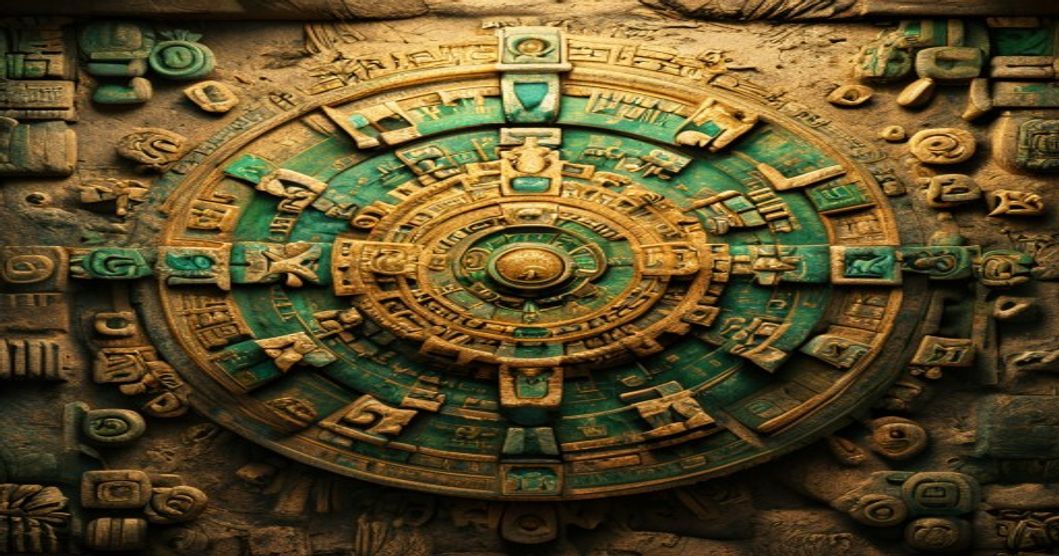
The Long Count Calendar: A Key to Understanding Maya Time
The Long Count Calendar is one of the most complex and fascinating aspects of Maya civilization. It is a system of measuring time that is both precise and cyclical, allowing the Maya to track the passage of time with incredible accuracy. This article will delve into the history, mechanics, and significance of the Long Count Calendar, providing a comprehensive understanding of this enigmatic system.
The Long Count Calendar is often referred to as the “Maya calendar” or the “Toltec calendar,” although it was not created by the Toltecs. Instead, it was developed by the Maya themselves, specifically in the region of Mesoamerica, which includes modern-day Mexico, Guatemala, Belize, and Honduras. The calendar is composed of three main units of time: the Baktun, the Katun, and the Tun, each with its own unique characteristics and calculations.
Understanding the Long Count Calendar
The Long Count Calendar is based on a system of counting that uses a vigesimal (base-20) and positional notation. Each unit of time is represented by a unique symbol, which is combined to create a complex system of calculations. The calendar is divided into three main units: the Baktun (144,000 days), the Katun (7,200 days), and the Tun (360 days), each with its own specific calculations and correlations.
Baktun: The Longest Unit of Time
The Baktun is the longest unit of time in the Long Count Calendar, representing 144,000 days or approximately 394 years. The Baktun is further divided into 20 cycles of 7,200 days, known as the Katun. Each Baktun is identified by a unique symbol, known as the “Baktun symbol,” which is used to record the year in which the Baktun begins.
Katun: The Middle Unit of Time
The Katun is the middle unit of time in the Long Count Calendar, representing 7,200 days or approximately 20 years. The Katun is further divided into 20 cycles of 360 days, known as the Tun. Each Katun is identified by a unique symbol, known as the “Katun symbol,” which is used to record the year in which the Katun begins.
Tun: The Shortest Unit of Time
The Tun is the shortest unit of time in the Long Count Calendar, representing 360 days or approximately 1 year. The Tun is further divided into 20 cycles of 18 days, known as the Winal. Each Tun is identified by a unique symbol, known as the “Tun symbol,” which is used to record the year in which the Tun begins.
Correlations and Alignments
One of the most fascinating aspects of the Long Count Calendar is its correlations and alignments with other calendrical systems. The Maya developed a complex system of correlations between the Long Count Calendar and other calendrical systems, such as the Tzolk’in Calendar and the Aztec Calendar. These correlations allowed the Maya to track the passage of time and make precise calculations.
| Calendar | Long Count Calendar | Correlation |
|---|---|---|
| Tzolk’in Calendar | 260 days | 20 x 13 = 260 |
| Aztec Calendar | 365 days | 365/20 = 18.25, approx. |
Calculating the Long Count Calendar
Calculating the Long Count Calendar is a complex process that requires a deep understanding of the Maya calendar system. The Maya developed a system of calculations that allowed them to track the passage of time with incredible accuracy. The calculations are based on a combination of astronomical observations and mathematical calculations.
- The first calculation is to determine the day of the year, using the Tzolk’in Calendar.
- The second calculation is to determine the month of the year, using the Tzolk’in Calendar.
- The third calculation is to determine the day of the week, using the Tzolk’in Calendar.
- The final calculation is to determine the year of the Long Count Calendar, using the Baktun, Katun, and Tun units of time.
Frequently Asked Questions
Q: What is the purpose of the Long Count Calendar?
A: The purpose of the Long Count Calendar is to track the passage of time and make precise calculations. The calendar is used to record the year in which a Baktun, Katun, or Tun begins, allowing the Maya to make accurate predictions about future events.
Q: How does the Long Count Calendar relate to the Tzolk’in Calendar?
A: The Long Count Calendar is correlated with the Tzolk’in Calendar, which is a shorter calendar that consists of 260 days. The two calendars are used together to make precise calculations and track the passage of time.
Q: What is the significance of the Baktun symbol?
A: The Baktun symbol is used to record the year in which a Baktun begins. The symbol is unique to each Baktun and is used to identify the year in which the Baktun begins.
Explore More
For a deeper understanding of the Maya calendar system, explore the free open archive at Mayan Library (mayanlibrary.org). Our collection includes articles, books, and other resources that provide a comprehensive understanding of Maya calendar history, cosmology, and culture.