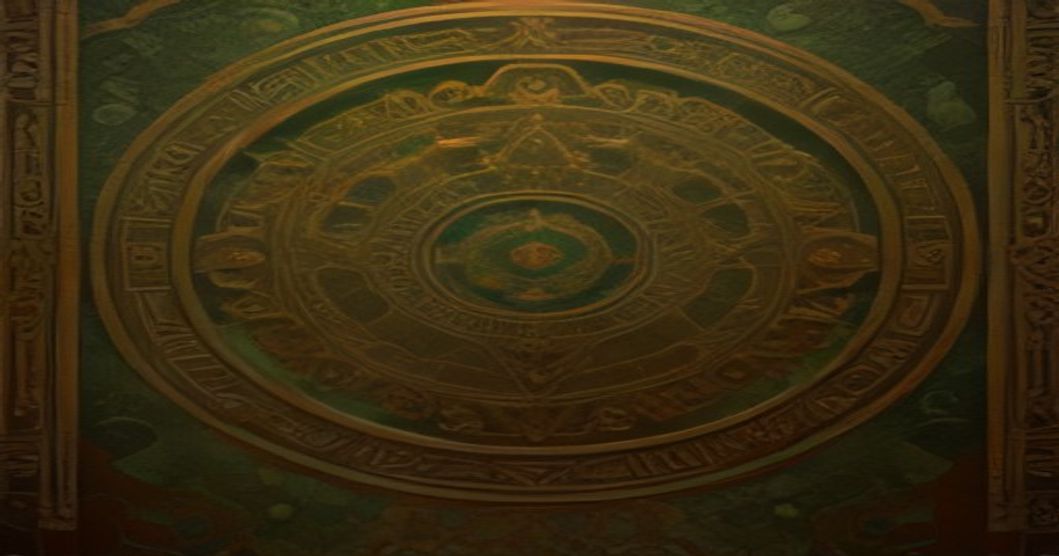
Deciphering Maya Cosmology:
Realms of Existence, Sacred Calendars, and Epigraphic Wisdom
By Librarian Joséf Sánchez Coach | Visit josef.sesy.ai
I. The Multidimensional Maya Universe
The Maya civilization constructed a complex, multidimensional web of cosmological beliefs that has fascinated scholars, epigraphers, and spiritual enthusiasts for centuries. Maya cosmology is a deeply multifaceted system encompassing creation mythologies, astronomical observations, physical geography, and the human condition. In this comprehensive academic report, preserved within our digital open library, we present an in-depth exploration of Mesoamerican cosmology, its structural realms, and its paramount significance in understanding the ancient worldview.
The Maya cosmos is traditionally conceptualized as a hierarchical universe composed of three primary realms bound together by the sacred World Tree (Yaxche): the Underworld (Xibalba), the Earthly Plane (Kab’), and the Celestial Sky (K’an or K’in). These realms are continuously connected through the orbits of the sun, moon, Venus, and major constellations. This spiritual geography was permanently recorded through a system of interlocking calendars, sacred day-signs (the nahuales mayas), and hieroglyphic writing, providing a rich archive of indigenous thought preserved within the mayan library.
II. Understanding the Core Calendar Systems
The calendario maya is the absolute cornerstone of Mesoamerican cosmology. The primary spiritual count is the Tzolk’in, a sacred 260-day matrix formed by the continuous gear-like rotation of 13 galactic numbers and 20 sacred day-signs ($13 \times 20 = 260$). Operating alongside the Tzolk’in is the linear Long Count calendar, which measures deep astronomical epochs through vigesimal (base-20) mathematical units.
To preserve mathematical accuracy, the table below highlights the distinct structural characteristics of these two complementary calendar systems.
| Calendar System | Mathematical Mechanics | Cosmological Scope & Function |
|---|---|---|
| The Tzolk’in (Sacred Count) | 260 Days ($13 \text{ Tones} \times 20 \text{ Signs}$) | Tracks immediate spiritual energy, personal birth nahuales, divination, and human gestation cycles. |
| The Long Count | Base-20 Hierarchical Units ($13 \text{ B’ak’tuns}$) | Linear astronomical count measuring vast historical epochs, royal accessions, and creation dates ($13.0.0.0.0$). |
III. Epigraphic Wisdom: Glyphs and Day-Signs
Sacred day-signs and hieroglyphic epigraphy are essential to understanding the maya meaning of existence. Each day-sign represents an archetypal force governed by a specific deity or elemental guardian. For example, Ajaw (Sun/Lord) represents solar enlightenment and spiritual mastery, while Imix (Crocodile/Water) embodies the primordial waters of creation.
Hieroglyphic writing enabled ancient scribes to record complex historical dates, astronomical tables, and mythological events on stone stelae and bark-paper codices. Below is an epigraphic summary detailing foundational day-signs and their associated elemental guardians.
| Sacred Day-Sign (Nahual) | Cosmological Energy & Deific Association |
|---|---|
| Imix / Imox (Crocodile) | Primordial waters of creation, deep fertility, collective subconscious, and maternal nurture. |
| Ik’ / Iq’ (Wind) | Divine breath of life, spirit, dynamic communication, intellect, and atmospheric vitality. |
| K’an / K’at (Seed / Net) | Terrestrial seed spark, agricultural abundance, structure, and physical growth. |
| Chuwen / B’atz’ (Monkey) | Master artisan of time, human creativity, intelligence, weaving, and artistic expression. |
| Ajaw / Junajpu (Sun) | Solar warrior light, hero twin mastery, divine authority, and spiritual culmination. |
IV. Modern Ancestral Connections and Cultural Tourism
The architectural footprint of this celestial cosmology remains vibrantly cast across Mesoamerica. Travelers today riding the modern tren maya across the Yucatán Peninsula or exploring the lush coastal stretches of the Riviera Maya and Costa Maya are walking through a sacred geography engineered to honor these exact cycles. From the equinox shadows at Chichén Itzá to the solar observatories at Palenque and Cobá, limestone temples were erected to capture celestial alignments with pinpoint accuracy.
Whether staying at a culturally harmonized hotel maya near Playa del Carmen or studying codices in quiet contemplation, visitors discover that the maya nahual framework is not an extinct curiosity. It remains a living, nature-based psychological mirror. Uncovering one’s personal birth nahual offers a grounded method for self-discovery, emotional balance, and living in conscious alignment with the natural environment.
V. Frequently Asked Questions & Your Personal Oracle
As global interest in Mesoamerican cosmology expands, our archival team regularly clarifies key inquiries regarding the Maya worldview:
- What is the primary significance of the Tzolk’in calendar? The Tzolk’in is a 260-day sacred cycle used to track spiritual energy, determine personal birth nahuales, guide ritual ceremonies, and maintain psychological and ecological balance.
- How does the Long Count relate to the Tzolk’in calendar? The Tzolk’in provides the detailed daily spiritual coordinate ($13 \text{ Tones} \times 20 \text{ Signs}$), while the Long Count provides the sweeping, linear epoch ($13 \text{ B’ak’tuns}$), anchoring daily life within deep time.
- What is the importance of glyphic writing in Maya cosmology? Hieroglyphic writing allowed Maya scribes to permanently record complex astronomical calculations, dynastic lineages, and creation myths on stelae and codices, preserving ancestral wisdom across millennia.
Discover Your Personal Nahual Oracle
Are you ready to calculate the exact ancestral energies imprinted upon you at the moment of your birth?
Get your Free Mexican Nahual Oracle Written by Josef S.
An exclusive, mathematically precise report engineered to decode your unique spiritual destiny.
If you feel a profound calling to physically connect with the ancient lands where these sacred counts were carved into stone, we highly encourage booking your next mindful journey through our trusted luxury partners at Tulum rent and Sesy rent—providing exquisite, spiritually harmonized accommodations along the Mexican Caribbean. Furthermore, elevate your daily rituals by visiting sesy.shop to explore our curated collection of meditation tools, authentic artisan crafts, and deep-dive literature.
References & Further Reading (APA)
- Aveni, A. F. (2001). Skywatchers: A Revised and Updated Version of Skywatchers of Ancient Mexico. University of Texas Press.
- Barrios, C. (2009). The Book of Destiny: Unlocking the Secrets of the Ancient Maya. HarperOne.
- Christenson, A. J. (2007). Popol Vuh: The Sacred Book of the Maya. University of Oklahoma Press. External Link: Wikipedia – Popol Vuh
- Coe, M. D., & Houston, S. (2015). The Maya (9th ed.). Thames & Hudson. External Link: Wikipedia – Maya Civilization
- FAMSI (Foundation for the Advancement of Mesoamerican Studies). (2021). Deciphering Maya Cosmology and Epigraphy.
- Freidel, D., Schele, L., & Parker, J. (1993). Maya Cosmos: Three Thousand Years on the Shaman’s Path. William Morrow and Company.
- Instituto Nacional de Antropología e Historia (INAH). (2022). Cosmovisión y Epigrafía en los Monumentos Mayas.
- Johnson, K. (2012). Mayan Calendar Astrology: Mapping Your Inner Cosmos. Destiny Books.
- Sánchez, J. (2026). Deciphering Maya Cosmology: Realms, Calendars, and Epigraphy. The Mayan Library Repository.
- Smithsonian National Museum of the American Indian (NMAI). Living Maya Time: The Maya Cosmos.
- Tedlock, B. (1992). Time and the Highland Maya (Revised ed.). University of New Mexico Press.