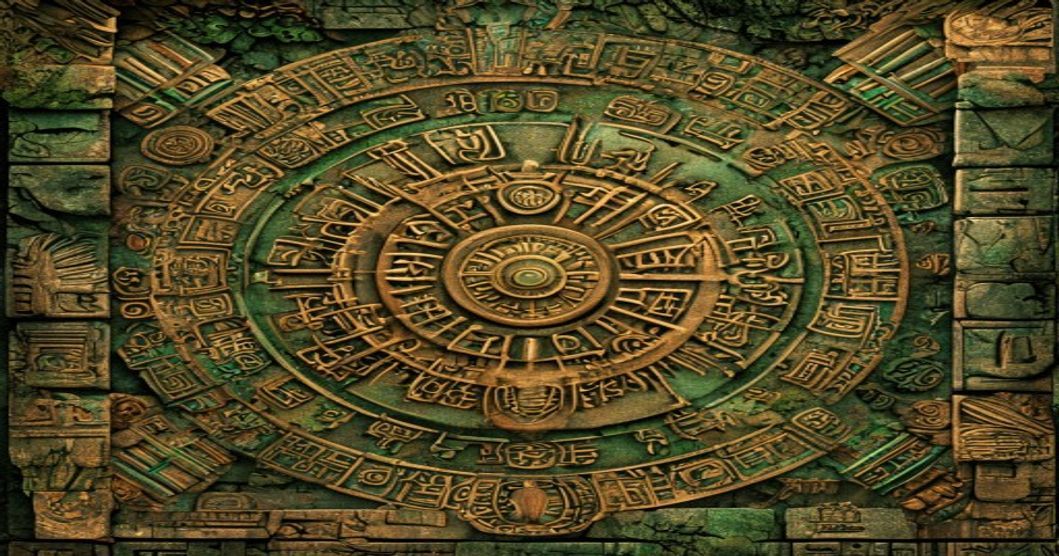
Unraveling the Ancient Maya’s Timekeeping System
Mayan long count calendars have fascinated scholars and enthusiasts alike for centuries. At its core, the Long Count is a sophisticated system of timekeeping that underlies the entire Maya civilization. By deciphering the secrets of the Long Count, we can gain a deeper understanding of Maya culture, cosmology, and the intricate relationships between their calendar systems, astronomy, and daily life.
The Long Count calendar is an absolute dating system, using a sequence of interlocking cycles to measure time from a fixed starting point known as the “Creation Date” (August 11, 3114 BCE in the Julian calendar). This system allows for precise calculations of dates, enabling us to pinpoint specific events, astronomical alignments, and cultural practices to a particular time and place. By exploring the Long Count calendar, we can uncover the hidden patterns and codes embedded within Maya history and daily life.
Understanding the Structure of the Long Count
The Long Count calendar consists of several interlocking cycles, each with its own unique characteristics and significance. The most prominent cycle is the Baktun, which is the largest unit of time in the Long Count system. A Baktun is equivalent to 144,000 days, or approximately 394 years. The Baktun is further divided into 20 cycles of increasing length, with the shortest cycle being the Tzolkin (a 260-day cycle used for divination and spiritual practices).
Correlations with Other Maya Calendars
The Long Count calendar has been linked to other Maya calendars, including the Tzolk’in and the Haab. The Tzolk’in is a 260-day cycle used for divination and spiritual practices, while the Haab is a 365-day solar calendar used for agricultural and ceremonial purposes. By analyzing correlations between these calendars, we can gain a deeper understanding of Maya cosmology and the relationships between their calendar systems.
Deciphering the Long Count Cycles
The Long Count calendar consists of five main cycles: the Baktun, Tzolkin, Uinal, K’in, and Chol. Each cycle has its own unique characteristics and significance, and understanding their relationships is crucial for deciphering the Long Count calendar.
| Cycle | Length (days) | Equivalent Years |
|---|---|---|
| Baktun | 144,000 | 394 years |
| Tzolkin | 260 | 0.72 years |
| Uinal | 20 | 0.05 years |
| K’in | 1 | 0.0028 years |
| Chol | 1/4 | 0.0007 years |
Day-Sign Meanings and Their Significance
The Long Count calendar is also deeply connected to the Maya day-signs, which are used for divination, spiritual practices, and everyday activities. Each day-sign corresponds to a specific combination of the Ahau (sun) and K’awiil (rain) gods, and understanding their meanings can provide valuable insights into Maya cosmology and daily life.
Day-Sign Correlations with Planets and Zodiac Signs
The Long Count calendar has been linked to the Maya concept of the “Planets,” which are associated with specific day-signs and their corresponding energies. By analyzing these correlations, we can gain a deeper understanding of the Maya’s understanding of the universe and their place within it.
Example: The Ahau-1 Day-Sign Correlation
The Ahau-1 day-sign is associated with the Sun and is linked to the “Planets” concept. By analyzing the correlations between the Ahau-1 day-sign and the planets, we can gain a deeper understanding of the Maya’s understanding of the universe and their place within it.
Correlation with the Zodiac Signs
The Long Count calendar has been linked to the Maya concept of the “Zodiac Signs,” which are associated with specific day-signs and their corresponding energies. By analyzing these correlations, we can gain a deeper understanding of the Maya’s understanding of the universe and their place within it.
Example: The K’awiil-1 Day-Sign Correlation
The K’awiil-1 day-sign is associated with the Rain God and is linked to the “Zodiac Signs” concept. By analyzing the correlations between the K’awiil-1 day-sign and the Zodiac Signs, we can gain a deeper understanding of the Maya’s understanding of the universe and their place within it.
Living Maya Culture and the Long Count Calendar
The Long Count calendar is not just a historical relic but a living part of Maya culture and daily life. Many Maya communities continue to use the Long Count calendar for ceremonial, spiritual, and practical purposes, and understanding its significance can provide valuable insights into the heart of Maya culture.
Maya Calendar Revitalization Efforts
Efforts are underway to revitalize the Maya calendar systems, including the Long Count calendar. These efforts aim to preserve the cultural heritage of the Maya people and promote a deeper understanding of their history and daily life.
Community Engagement and Education
Community engagement and education are crucial for the revitalization of the Maya calendar systems. By working with Maya communities and promoting education and awareness, we can ensure the continued use and relevance of these ancient calendars.
Frequently Asked Questions
Q: What is the Long Count calendar, and how does it work?
A: The Long Count calendar is an absolute dating system used by the Maya civilization to measure time from a fixed starting point known as the “Creation Date.” It consists of several interlocking cycles, including the Baktun, Tzolkin, Uinal, K’in, and Chol.
Q: What is the significance of the Long Count calendar in Maya culture?
A: The Long Count calendar is a fundamental part of Maya culture, used for ceremonial, spiritual, and practical purposes. It is also deeply connected to the Maya day-signs and their corresponding energies.
Q: How can I learn more about the Long Count calendar and its significance in Maya culture?
A: There are many resources available to learn more about the Long Count calendar and its significance in Maya culture, including books, documentaries, and online courses. You can also explore the Maya Library’s collection of documents, images, and artifacts related to the Long Count calendar.
Explore More
Discover the rich cultural heritage of the Maya people by exploring the free, open archive at Mayan Library (mayanlibrary.org). Browse our collection of documents, images, and artifacts related to the Long Count calendar and Maya culture, and engage with our community of scholars and enthusiasts.